


What does it mean to regenerate? How do places source regenerative ingredients? How is a farm that implements regenerative practices different? Let's discuss:
1) Let’s start with the fundamentals: what does the word “regenerative” mean? What is a regenerative system?
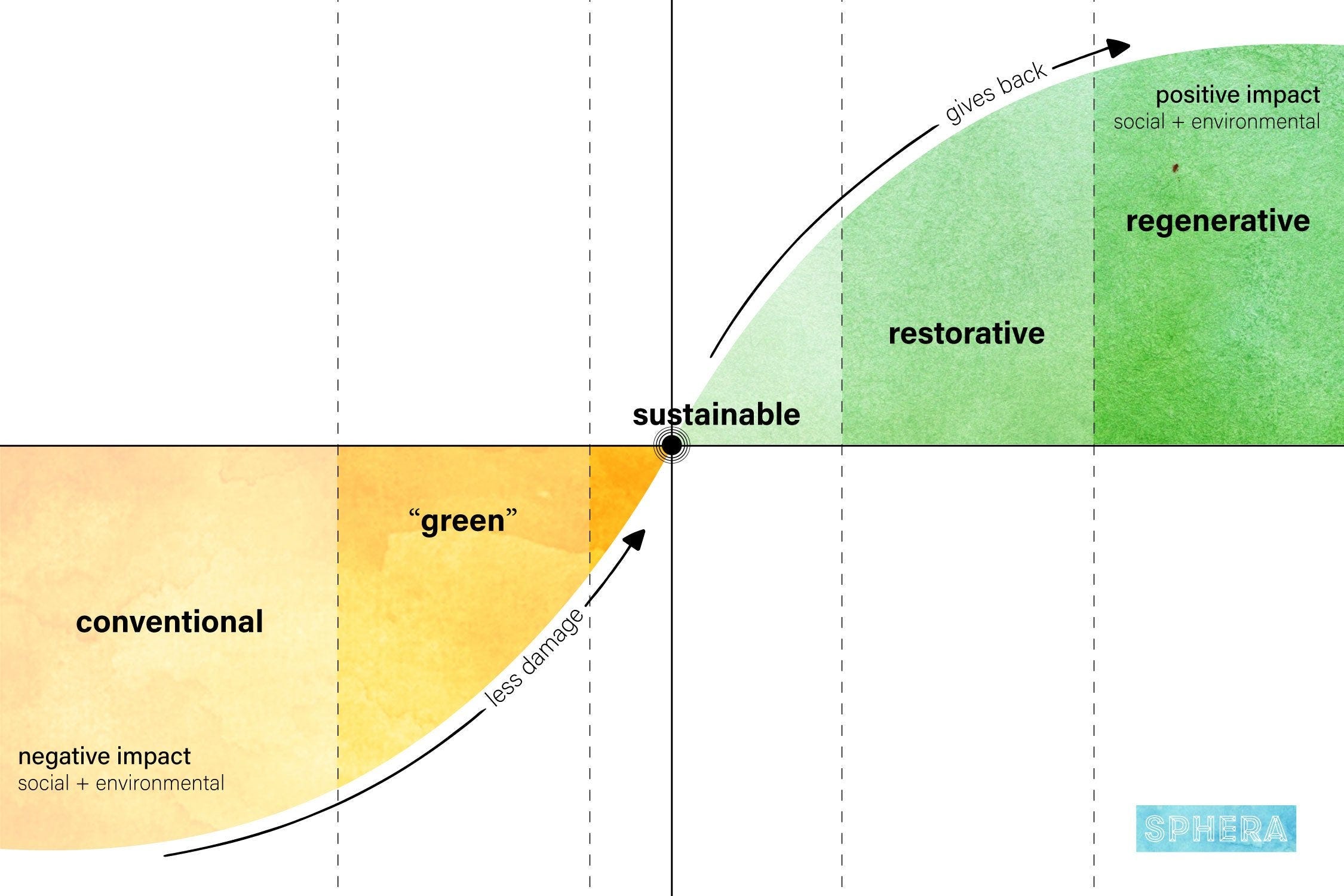
Regenerative systems have a positive impact and regenerate the communities and environments in which they operate. This is opposite to a conventional system (negative impact) and a step beyond a sustainable system (status quo).
2. What is conventional farming?
How to implement conventional farming:
- Solely focus on mass production, regardless of environmental impact
- Wipe out all other living things to grow a single crop over extensive areas (aka large-scale monoculture)
- Heavily use synthetic fertilizers and toxic, carcinogenic pesticides
- Rely on disruptive machinery and soil tilling
The outcome of conventional farming:
- Voluminous output and profit from a single crop
- Soil degradation (aka dead soil)
- Loss of biodiversity
- High water pollution and water waste
- Release of large amounts of carbon (once stored by soil) into the atmosphere
3. What is regenerative farming?
How to implement regenerative farming:
- Focus on improving soil health and biodiversity
- Work in harmony with nature, the animals, and the earth
- Minimally disturb the soil (no-till or low-till)
- Implement cover cropping and crop rotation practices
- Allow livestock to preform natural grazing patterns
The outcome of regenerative farming:
- Healthy, enriched soil
- Improved rain water retention
- Carbon sequestered into soil
- Improved biodiversity
- Enhanced ecosystem resilience
- High quality food products that can heal people
4. Why is regenerative important? Why should we care?
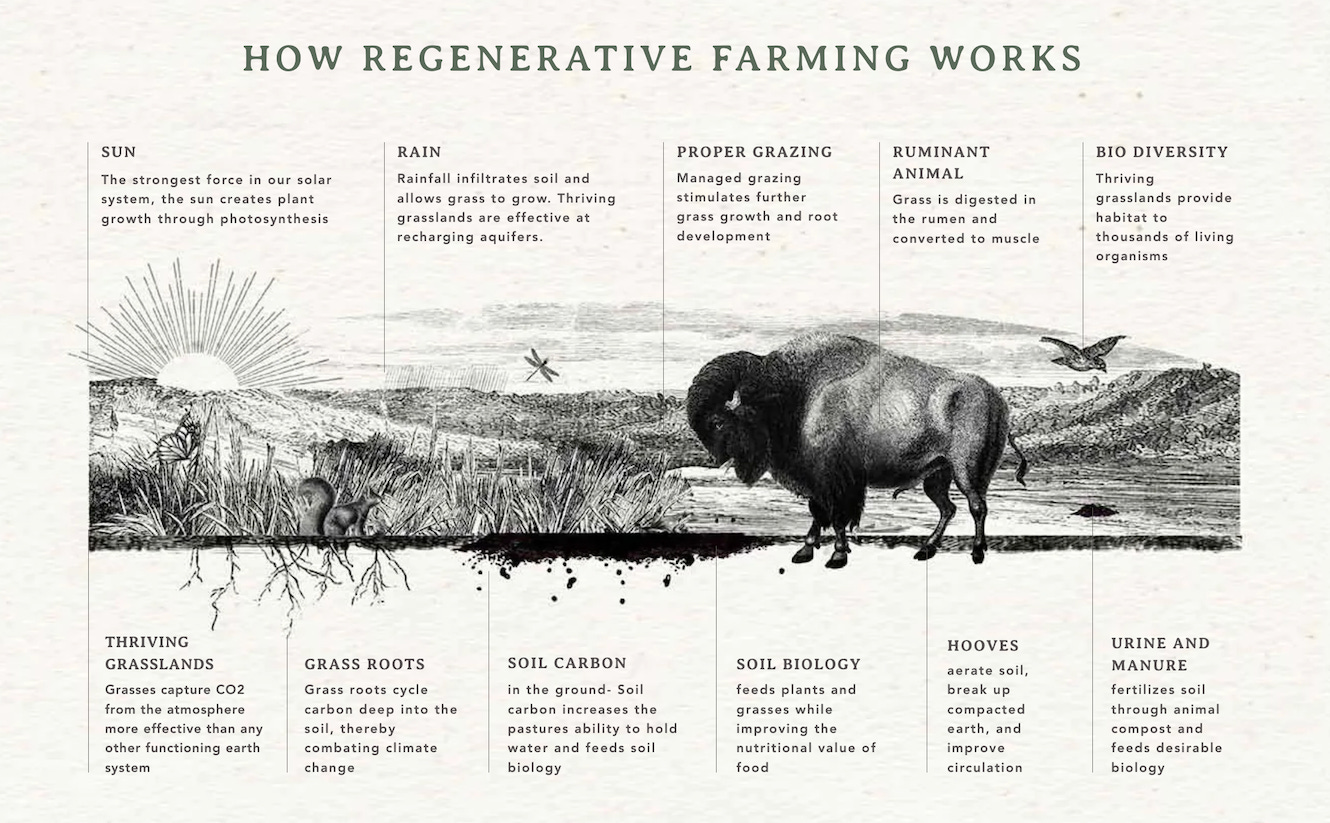
(Source: Force of Nature)
Conventional farming promotes disease and death to animals and ecosystems, our food supply, and ultimately to us. Sad and sickly cows make sad and sickly meat and milk. If plants/fruit are grown with pesticides and you eat them, you are eating the pesticides.
Regenerative concepts align our farming practices and food supply with nature, which is fundamental to healing the earth and our communities.
5. How can you tell if a farm follows regenerative practices?
The best tool is in-person research. Visit the farm, meet the farmer, and see their practices yourself.
You can also explore on Field, which has the benefit of showing you the entire relationship map of your favorite regenerative farm to all the markets and eateries they supply to.
On a personal note, having a solid understanding of what “regenerative” truly means has helped me make the best decisions when deciding where I shop and how I source my food.
- Kaleb
